Gaming in New Zealand & Australia: Statistics (to 2026)

Free to use with a link back to ShaneTheGamer — compiled and kept up to date from the public sources listed below. Figures reflect the latest available reporting. Last updated: 2026.
Gaming is mainstream across Australasia — bigger than most other entertainment categories on consumer spend. This page gathers the headline statistics on players, spending and demographics in New Zealand and Australia, drawn chiefly from IGEA’s annual Digital New Zealand and Digital Australia research, updated to 2026.
Key Takeaways for Journalists
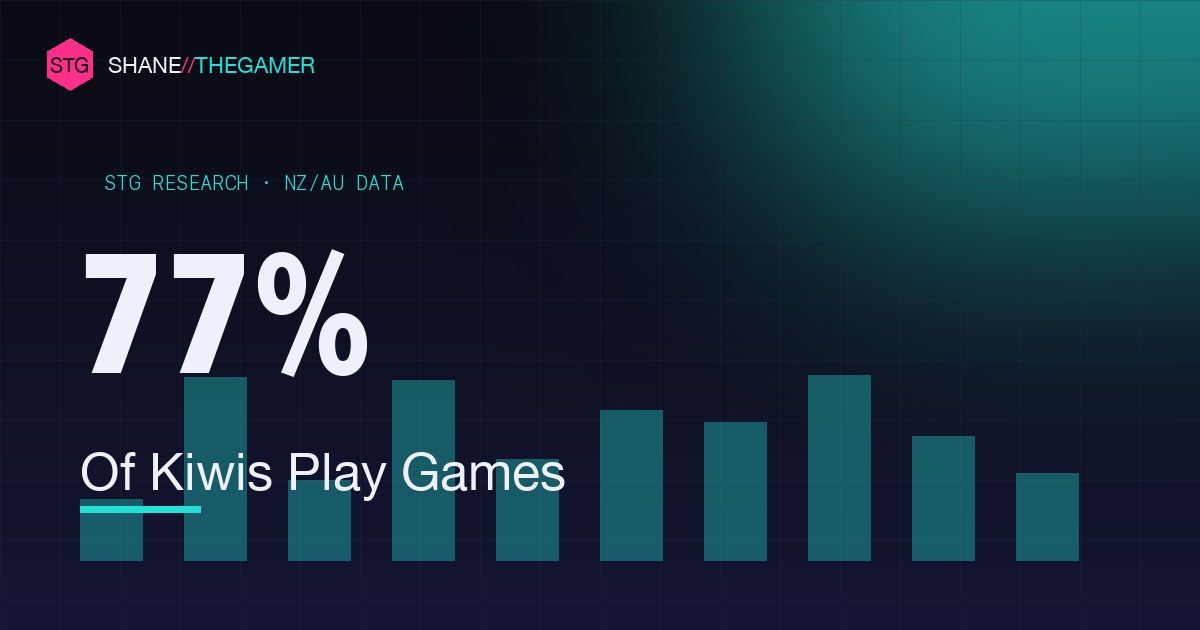
- Around 77% of New Zealanders and 67% of Australians play video games.
- Australians spend an estimated A$4 billion+ a year on games; New Zealanders NZ$700M+.
- The average player is aged ~35 — not a teenager.
- Close to half of all players are women (~46–48%).
- The great majority of homes have a device used to play games.
- Older adults are the fastest-growing gaming demographic in both countries.
How Many People Play Games in NZ & Australia?
IGEA’s research consistently finds gaming is a majority activity across Australasia: roughly two-thirds of Australians and an even higher share of New Zealanders — around three-quarters — play video games. The average player age sits in the mid-30s, and the gender split is close to even, dispelling the stereotype of gaming as a young-male pursuit.
How Much Do New Zealand & Australia Spend on Games?
Australia’s total consumer spend on games runs to an estimated A$4 billion or more a year across hardware, software and in-game purchases. New Zealand’s market, scaled for its smaller population, sits in the NZ$700 million-plus range. In both countries, games rival or exceed box-office and music on consumer spend.
| Metric | New Zealand | Australia |
|---|---|---|
| Population who play | ~77% | ~67% |
| Average player age | ~34 | ~35 |
| Female players | ~46% | ~47% |
| Annual consumer spend | NZ$700M+ | A$4B+ |
Demographics & Trends
Two trends stand out. First, parents are gamers too — a large share play with their children, shaping attitudes to classification and screen time. Second, older adults are the fastest-growing segment: gaming among over-55s has climbed steadily, driven by mobile and casual titles.
Why It Matters
These figures make gaming one of the largest entertainment categories in both nations — essential context for coverage of game classification, in-game spending, esports investment and screen-time policy. For the regulatory angle on randomised paid rewards, see our loot box spending research.
Frequently Asked Questions
What percentage of New Zealanders play video games?
Around 77% of New Zealanders play video games, per IGEA’s Digital New Zealand research — one of the highest participation rates in the world.
How much do Australians spend on video games?
Australians spend an estimated A$4 billion or more a year on games across hardware, software and in-game purchases.
What is the average age of a gamer in Australia and NZ?
About 35 in Australia and mid-30s in New Zealand — the typical player is a working-age adult, not a teenager.
Are most gamers male?
No — the split is close to even, with women making up roughly 46–48% of players in both countries.
Methodology & Sourcing
Figures are drawn from IGEA’s Digital Australia and Digital New Zealand reports and associated member research, expressed as the latest available findings. Spend figures are total consumer spend across hardware, software and in-game purchases; participation and demographic figures are as surveyed. Numbers are rounded and updated as new IGEA research is released.
Sources
- IGEA — Digital Australia report (latest)
- IGEA — Digital New Zealand report (latest)
- Interactive Games & Entertainment Association member data
- Aotearoa / Australia participation surveys
Have newer figures or spot an error? We keep this page current — get in touch via our Contact page.

Join the Conversation