AI in Gaming Statistics (2026): Developer Adoption & Sentiment

Free to use with a link back to ShaneTheGamer — compiled and kept up to date from the public sources listed below. Figures reflect the latest available reporting. Last updated: 2026.
Generative AI is one of the most contested topics in game development. This page compiles the 2026 statistics on how AI is actually used — and how developers feel about it — cutting through the hype.
Key Takeaways for Journalists
- Around 30% of studio developers personally use generative AI in their work.
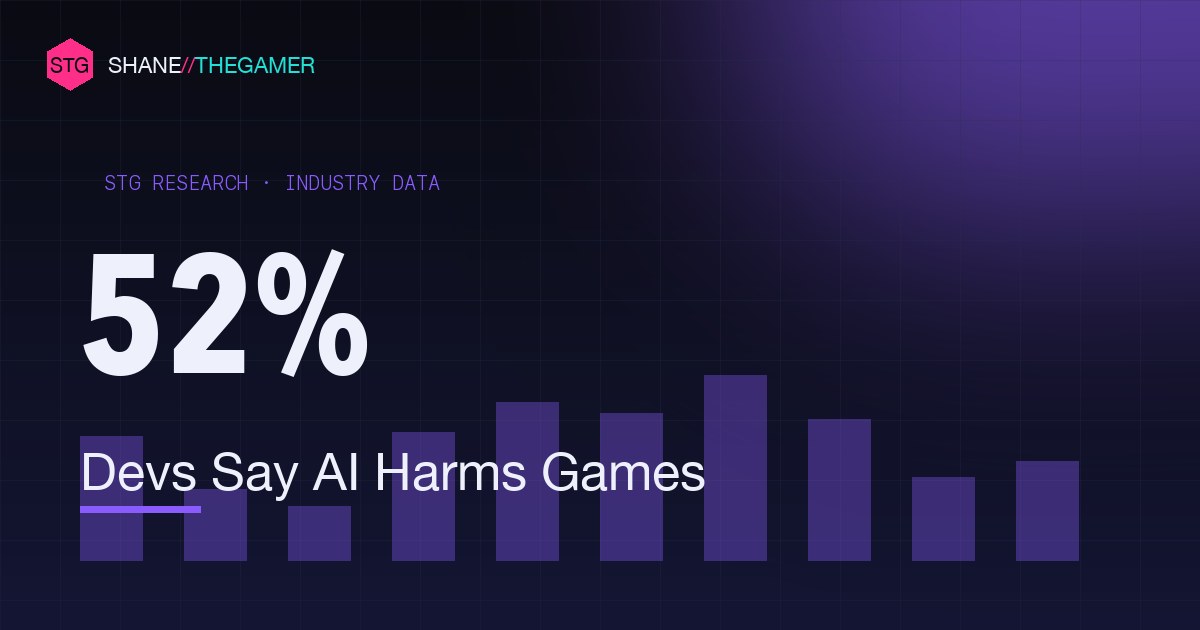
- But 52% of developers believe generative AI harms the industry — the highest yet.
- Personal generative-AI use among devs fell to ~29% in 2026, down from prior years.
- ChatGPT (74%) is the most-used AI tool among developers.
- AI is mostly used for research/brainstorming (81%) — rarely for creative assets (19%).
- Adoption is higher in marketing/publishing (58%) than in development studios.
How Many Developers Use AI?
Despite the hype, hands-on adoption in game development is modest and even declining. Around 30% of studio developers personally use generative AI tools, and overall personal use fell to about 29% in 2026, down from prior years — while adoption is far higher (58%) in marketing, publishing and support functions.
| Metric | 2026 figure |
|---|---|
| Studio devs using genAI | ~30% |
| Personal use (all roles) | ~29–36% |
| Believe genAI is harmful | 52% |
| Most-used tool | ChatGPT (74%) |
| Use for research/brainstorm | 81% |
| Use for asset generation | 19% |
Developers Are Sceptical
Sentiment has soured: 52% of developers now believe generative AI is having a negative impact on the industry — the highest level recorded — with concerns strongest among visual artists, designers and programmers who fear for craft and jobs. This is why AI use in games is often quiet and controversial.
What AI Is Actually Used For
The reality is unglamorous: developers who use AI mostly apply it to research and brainstorming (81%) and daily admin like code assistance and emails (47%). Creative uses remain rare — asset generation just 19%, procedural generation 10%, and player-facing features only 5%. The ‘AI-made game’ remains far more hype than reality in 2026.
Frequently Asked Questions
How many game developers use AI?
Around 30% of studio developers personally use generative AI, though adoption is higher (58%) in marketing and publishing roles.
Do game developers like generative AI?
Mostly no — 52% believe generative AI is harming the industry, the highest level recorded, with concerns strongest among artists and programmers.
What do developers use AI for?
Mostly research and brainstorming (81%) and admin/code tasks (47%). Creative uses like asset generation (19%) remain rare.
Is AI taking over game development?
Not in 2026 — hands-on use is modest and even declining, and most creative work remains human. AI is used far more for admin than for making games.
Methodology & Sourcing
Figures are from the GDC State of the Game Industry survey and related developer polls (Statista, Game Developer). Adoption and sentiment figures reflect survey samples and vary by role and study. Rounded and updated as new surveys are published.
Sources
- GDC — State of the Game Industry survey (2026)
- Statista — AI use in video game development
- Game Developer — AI adoption reporting
Have newer figures or spot an error? We keep this page current — get in touch via our Contact page.

Join the Conversation