
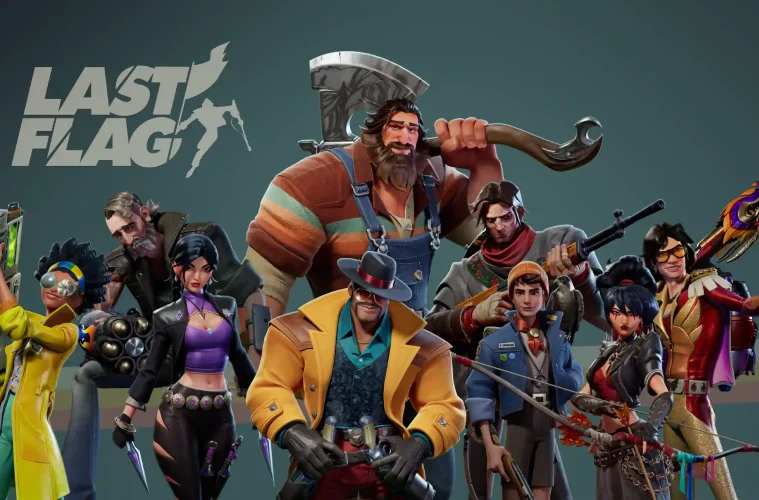
Night Street Games, the indie studio funded by members of the band Imagine Dragons, has laid off about a dozen staff after its multiplayer shooter Last Flag fell short of the financial success the team had anticipated. CEO Mac Reynolds confirmed the redundancies in a statement, leaving the studio with 13 remaining developers a little over a month after the game launched on 14 April 2026.
Last Flag shipped to a Mostly Positive reception on Steam, yet the player count never reached the level Night Street needed to keep the project growing. The studio has pledged to continue updating the game with new maps, modes and cosmetics before turning its attention to fresh projects.
The Redundancies At Night Street Games
About a dozen developers have been let go from Night Street Games, reducing the team to 13 remaining staff. CEO Mac Reynolds confirmed the redundancies, saying the studio had poured everything into bringing Last Flag to life but that game development remains an inherently risky business. Reynolds said Night Street would work with the affected developers over the coming months to help them find new opportunities.
News of the cuts first surfaced through executive producer Jonathan Jelinek, who set out the situation in a post on LinkedIn.
Jelinek said Last Flag had not achieved the financial success Night Street anticipated, the same shortfall Reynolds pointed to in explaining the decision. Between the two statements, the studio framed the layoffs as a direct response to the game’s commercial performance rather than any change in creative direction.
With a dozen roles gone and 13 developers left, Night Street has shed close to half of the team that built and launched Last Flag. A studio of that size carries a much narrower output, and the work immediately ahead centres on supporting the game already released rather than scaling up for anything larger. Reynolds gave no indication that the studio planned further reductions, framing the current 13-person team as the group that would carry Last Flag forward.
Last Flag’s Launch And Steam Reception
Last Flag launched on 14 April 2026 as a multiplayer shooter and currently holds a Mostly Positive rating on Steam, drawn from 475 user reviews. On Steam’s scale, Mostly Positive places the game in the band where roughly seven to eight in every ten reviews are favourable, marking a release that landed well with the players who bought it.
The sentiment, though, sits against a modest review total. A count of 475 reviews points to a small launch audience for a game built around online multiplayer, and a multiplayer shooter depends on a steady concurrent population far more than on review sentiment alone. Empty lobbies and long matchmaking queues weigh on player retention regardless of how positively the game scores, and a thin launch crowd makes that problem harder to climb out of.
That gap between a warm reception and a small audience runs through the whole situation at Night Street. Last Flag was not rejected on quality, which leaves the financial result, not the design, as the reason the studio reached for redundancies barely a month after release. For an indie team launching a single online title, a positive but quiet debut is one of the harder outcomes to recover from.
The 1 May Blog Post And A Falling Player Count
Night Street had signalled trouble before the layoffs were confirmed. In a blog post published on 1 May, just over two weeks after launch, the team said Last Flag’s player count was not where it needed to be to support additional development beyond the patches already planned.
That post drew a line under how far the studio could take the game on its launch performance alone. Rather than promising an open-ended content pipeline, Night Street tied any work past the immediate patches to a recovery in the player base that had not arrived. The redundancies followed within weeks, turning the blog post’s caution into a confirmed reduction in headcount. The wording also set expectations for players, making clear that the support roadmap would be finite rather than the rolling content cycle that live multiplayer games often promise at launch.
The timeline is tight. Last Flag launched on 14 April, the player count warning came on 1 May, and the layoffs were confirmed in the weeks after, all inside the game’s first two months on sale. For a debut release, it left Night Street very little runway between launch and the decision to cut staff, and almost no time for a marketing push or seasonal content to turn the population around.
Night Street Joins A Wider Wave Of 2026 Layoffs
The cuts at Night Street Games land in a month already crowded with job losses across the games industry. Night Street joins a growing list of studios that have announced layoffs or closures through May 2026, a list that also includes Metacore, 2K and MercurySteam.
For Night Street, the parallel is uncomfortable but instructive. Larger and longer-established companies have not been shielded from the same pressures, and a small studio launching a single multiplayer title into that environment carries far less margin for a soft commercial start. A debut release that reviews well but sells modestly leaves almost no room to absorb a shortfall.
The Imagine Dragons connection gave Night Street a higher profile than most studios of its size, with members of the band among its backers. That profile has not changed the maths facing the team. Last Flag still needs a player base large enough to justify continued investment, and the funding behind the studio does not remove the commercial test the game now has to pass. The redundancies show that even a well-backed indie is held to the same standard as any other release on a crowded storefront.
The Updates Still Planned For Last Flag
Despite the smaller team, Night Street has confirmed that Last Flag will keep receiving content before the studio moves on to new ideas. The team has committed to a defined set of additions built around new modes, maps and player-side options.
- New contestants joining the existing roster
- Additional maps for the multiplayer rotation
- A new game mode
- New cosmetics
- The ability for players to host lobbies with custom rules
The custom lobby feature stands out for a multiplayer shooter with a thin population. Letting players set their own rules and run their own matches hands the community a tool to keep games going even when official matchmaking is quiet, which can matter more for retention than new maps for a title fighting to hold its audience.
Night Street has been clear that this content arrives before, not instead of, the studio’s next move. Once the planned updates are out, the 13-strong team intends to begin work on new game ideas, treating Last Flag’s remaining roadmap as the closing chapter of the project rather than an open-ended commitment. Whether those updates can lift Last Flag’s population enough to reshape that plan, or whether Night Street moves on as scheduled, is the question now facing the studio.