
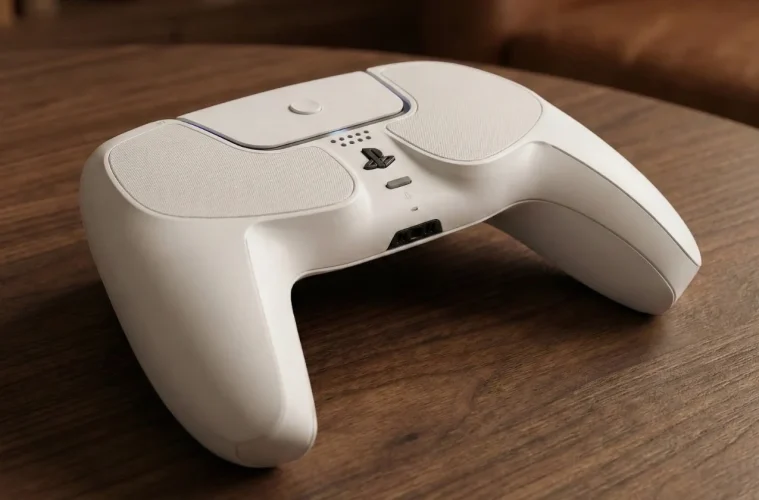
Sony has secured a new patent describing a PlayStation controller concept that removes physical buttons entirely, replacing them with adaptive touch-based input surfaces. The filing, published in late January, outlines a highly customisable controller designed to adjust to different hand sizes, play styles, and accessibility needs, though there is no confirmation it will ever become a consumer product.
Sony Granted A New Buttonless Controller Patent
Sony Interactive Entertainment has been granted a United States patent for a controller that does not rely on traditional buttons, triggers, or sticks. The patent, identified as USPTO grant number 12533573 and first highlighted by Video Games Chronicle, was officially published on January 27, 2026, after being filed back in February 2023.
Unlike most PlayStation controller patents, which still incorporate some form of physical input, this design centres on adaptive input surfaces capable of detecting touch, taps, long presses, swipes, slides, and pressure. The concept represents a clear departure from conventional gamepad layouts rather than a minor iteration on existing designs.
How The Touchscreen Controller Would Work
According to the patent documentation, the controller replaces fixed buttons with touch-sensitive surfaces that can dynamically generate virtual controls. These controls appear and adjust based on how the player is holding the controller, allowing layouts to shift in real time.
In some illustrated implementations, the controller uses multiple touchscreens that illuminate virtual buttons, D-pads, or sticks where the player’s fingers naturally rest. However, the core patent claims do not require a screen at all. Instead, they broadly cover adaptive input surfaces, with visual feedback described as optional rather than essential.
This means the technology could theoretically be applied to a more traditional controller design that still includes some physical elements, rather than requiring a fully screen-based device.
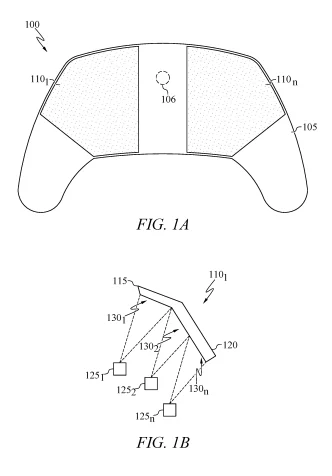
Image Credit: Sony
Custom Layouts And Accessibility Focus
A central argument in Sony’s patent is that fixed controller layouts do not work for everyone. The company notes that standardised button placements can be uncomfortable or impractical for players with different hand sizes, physical disabilities, or unconventional play setups.
With the proposed design, players could reposition virtual buttons, resize them, or remove them entirely depending on the game. For example, a simple platformer could be mapped to a single oversized jump button, while a game that only needs a D-pad or left stick could eliminate unused inputs altogether.
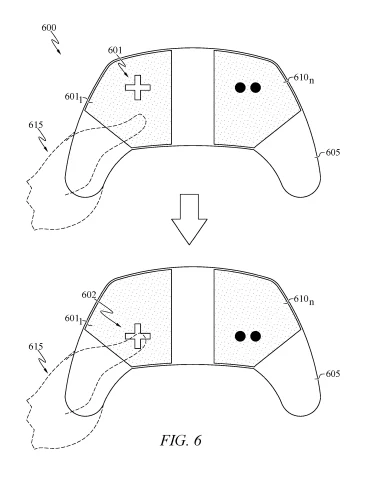
Image Credit: Sony
Sony argues this approach could reduce the need to manufacture multiple specialised controllers, offering flexibility through software rather than hardware variants. At present, the company addresses accessibility through dedicated devices like the PlayStation 5 Access Controller, which launched in December 2023.
Sensors To Prevent Accidental Inputs
One potential concern with touch-based controllers is accidental input when a player rests their thumbs on the surface. Sony’s patent addresses this by referencing pressure and heat sensors capable of detecting the condition of the input surface.
While the filing does not clarify whether these sensors operate on simple on-off detection or varying sensitivity levels, the implication is that the controller could distinguish between a resting finger and an intentional press. This is a known issue in earlier touch-based controllers, such as third-party designs from the 1990s that replaced D-pads with touch panels and suffered from unintended movement.
Patent Volume And Commercial Reality
Sony files and secures a large number of patents every year, most of which never result in consumer products. Data cited from Parola Analytics shows that the Sony Group was granted 2,256 U.S. patents in 2025 alone, ranking it as the 14th most prolific patent filer, just below Dell and above Intel.
As of January 31, 2026, Sony and its subsidiaries reportedly hold more than 133,000 U.S. patents. The vast majority of these inventions have never been commercialised, making the statistical likelihood of this controller reaching market relatively low.
Could This Be Linked To PS6 Plans?
The timing of the patent’s publication has led to speculation about its relevance to Sony’s next console generation, often referred to as the PlayStation 6. However, the patent itself makes no reference to a specific console or release window.
That said, Sony has shown increasing interest in adaptive and context-aware controller technology. Recent patents have explored features such as controllers that detect whether a player is reclining or lying down and adjust inputs accordingly, as well as experimental designs involving deformable shapes or biometric sensors.
Given that accessibility is becoming a growing priority across the industry, this particular filing may have a higher chance of influencing future hardware than the average Sony patent, even if it never appears in its current form.