CS:GO Hits New 2026 Peak of 68,231 Players Months After Steam Return

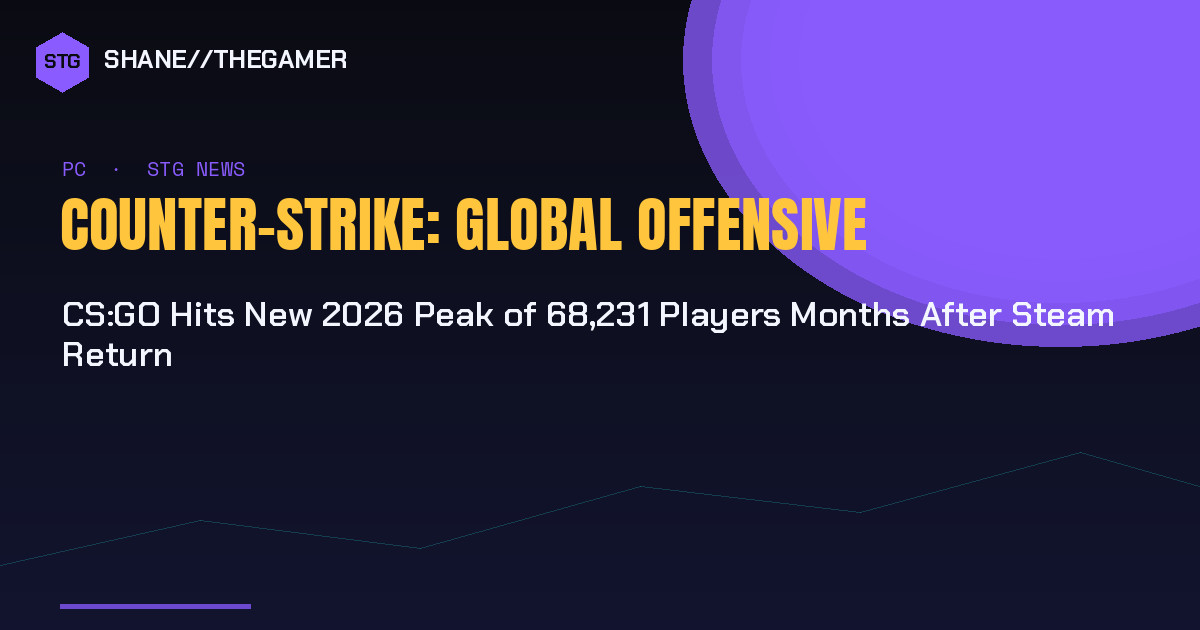
Counter-Strike: Global Offensive has quietly pulled off one of the more unlikely comebacks of 2026, hitting a new peak concurrent player count on Steam more than a decade after its original release. According to Insider Gaming, the 14-year-old shooter reached 68,231 concurrent players on July 1, holding those numbers steady in the days that followed, months after Valve split it back out as a standalone title from Counter-Strike 2.
That figure is a huge jump from just a week earlier, when Insider Gaming reported CS:GO was sitting at roughly 18,000 concurrent players. What triggered the sudden spike isn’t entirely clear, but it lines up with a broader pattern of players rediscovering the older shooter now that it’s easy to access again outside of CS2’s shadow.
Why CS:GO Split From Counter-Strike 2 in March
Valve quietly restored CS:GO as its own separate listing on Steam back in March, giving players a way to boot up the classic build without it being folded into or overwritten by Counter-Strike 2. For years after CS2 launched, CS:GO effectively disappeared from the storefront as an active option, leaving longtime fans of the older engine, older movement mechanics and older map pool with nowhere to go.
That separation matters for a scene built on muscle memory and nostalgia. Plenty of Counter-Strike veterans spent close to a decade perfecting spray patterns, smoke lineups and peeking angles on CS:GO’s specific tick-rate and hit registration, and CS2’s overhauled engine changed enough of that formula that some players simply preferred to go back rather than adapt.
The Numbers Behind CS:GO’s 2026 Resurgence
Despite the fresh peak, CS:GO is still a minnow compared to its successor. Insider Gaming notes that Counter-Strike 2’s own all-time peak on Steam sits at a massive 1.86 million concurrent players, meaning CS:GO’s new high is still more than 90 percent lower than what CS2 can pull on its best days.
Where CS:GO is winning, though, is on user sentiment. According to Insider Gaming, the standalone release currently holds a 96 percent positive rating from more than 60,000 Steam reviews, comfortably ahead of Counter-Strike 2’s 85 percent positive rating across a colossal 9.7 million reviews. For a game most people assumed was effectively retired, that’s a striking scorecard.
What This Means for Valve’s Two-Game Strategy
Running two live versions of the same franchise side by side is an unusual move for Valve, a studio not exactly known for chasing every trend. But keeping CS:GO available as a legacy option costs Valve very little while giving a slice of the community exactly what it’s been asking for since CS2 first launched: the original game, untouched, still receiving enough backend support to stay playable and matchmaking-ready.
It also means Valve isn’t forcing a binary choice on players. Esports organisations, content creators and casual squads can dip into CS:GO for old-school lobbies or nostalgia runs while still treating Counter-Strike 2 as the flagship competitive product, the one carrying Major tournaments, sponsorship money and the bulk of the professional scene.
A Reminder of Counter-Strike’s Staying Power
Whatever caused the specific spike in early July, the broader story is that a 2012-era shooter can still climb Steam’s charts in 2026 without a single new content drop driving it. That’s a rare feat even among Valve’s own back catalogue, and it underlines just how deep the well of goodwill runs for the Counter-Strike series among PC players in Australia, New Zealand and beyond who cut their teeth on the original CS:GO maps, skins economy and server culture.
Whether this peak holds or fades back down toward its recent baseline, CS:GO’s return to relevance is a reminder that Valve’s back-catalogue decisions can still move the needle on Steam’s most-played charts, more than a decade after the game first shipped.



Join the Conversation