
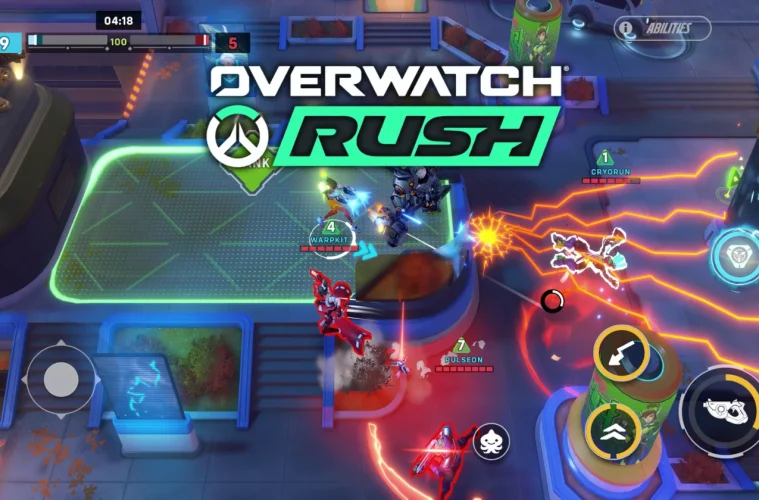
Blizzard has officially announced Overwatch Rush, a brand-new mobile spin-off set in the Overwatch universe. Rather than being a straight port of the main game, Overwatch Rush is a top-down 4v4 hero shooter built specifically for iOS and Android, and it’s already gearing up for regional testing.
The studio shared the news in a development update, making it clear that everything shown so far is still a work in progress and subject to change. Even so, there’s already plenty to unpack about what this mobile take on Overwatch will actually look and feel like.
What Is Overwatch Rush
Matches are 4v4, and based on early gameplay footage, they revolve around objective-based modes similar to the main game. Familiar heroes like Mercy, Reaper, Tracer, and Reinhardt appear in the reveal, with ability kits that largely mirror their original counterparts.
Blizzard has stressed that Overwatch Rush is an entirely new game. It is not a port, not a companion app, and not an extension of the current Overwatch experience. It is being built from the ground up for mobile players.
Developed By A Separate Blizzard Team
One key point Blizzard clarified in its development update is that Overwatch Rush is not being made by Team 4, the core team behind Overwatch.
Instead, it’s being developed by a dedicated team within Blizzard that has deep mobile experience. Team 4 remains focused on the main Overwatch game on PC and console, which is currently in its recently launched Season 1 and beyond.
That distinction is important for players concerned about resources being pulled away from the core game. Blizzard’s messaging makes it clear that Overwatch Rush is an expansion of the universe, not a replacement or shift in direction for the flagship title.
Game Modes And Match Length
According to hands-on impressions from GameSpot’s Jessica Cogswell, who spent around 90 minutes with the game, matches are designed to last about three minutes. That short format is intentional, built around quick sessions that suit mobile play.
Three modes were available in her preview build: Control-Point, Nano Grab, and Free-For-All.
Control-Point is a condensed version of the classic mode Overwatch players already know, with action focused on a single objective. There are no enforced role restrictions, but team composition still matters.
Nano Grab is more bespoke to Rush. Teams collect glowing objects called Nanos and deposit them into a shifting bank location, with the first team to reach 100 Nanos winning. Because the bank cannot be captured if the enemy team is present, it creates fast-paced, tactical skirmishes.
Free-For-All strips things back even further. Four players enter, and the first to reach five eliminations wins. With smaller, scaled-down maps inspired by locations like Busan, Gibraltar, and Anubis, encounters happen quickly and constantly.
Familiar Heroes With Mobile Tweaks
At launch, Overwatch Rush features eight heroes drawn directly from the main roster: Mercy, Tracer, Reaper, Soldier 76, Kiriko, Lucio, Reinhardt, and Pharah.
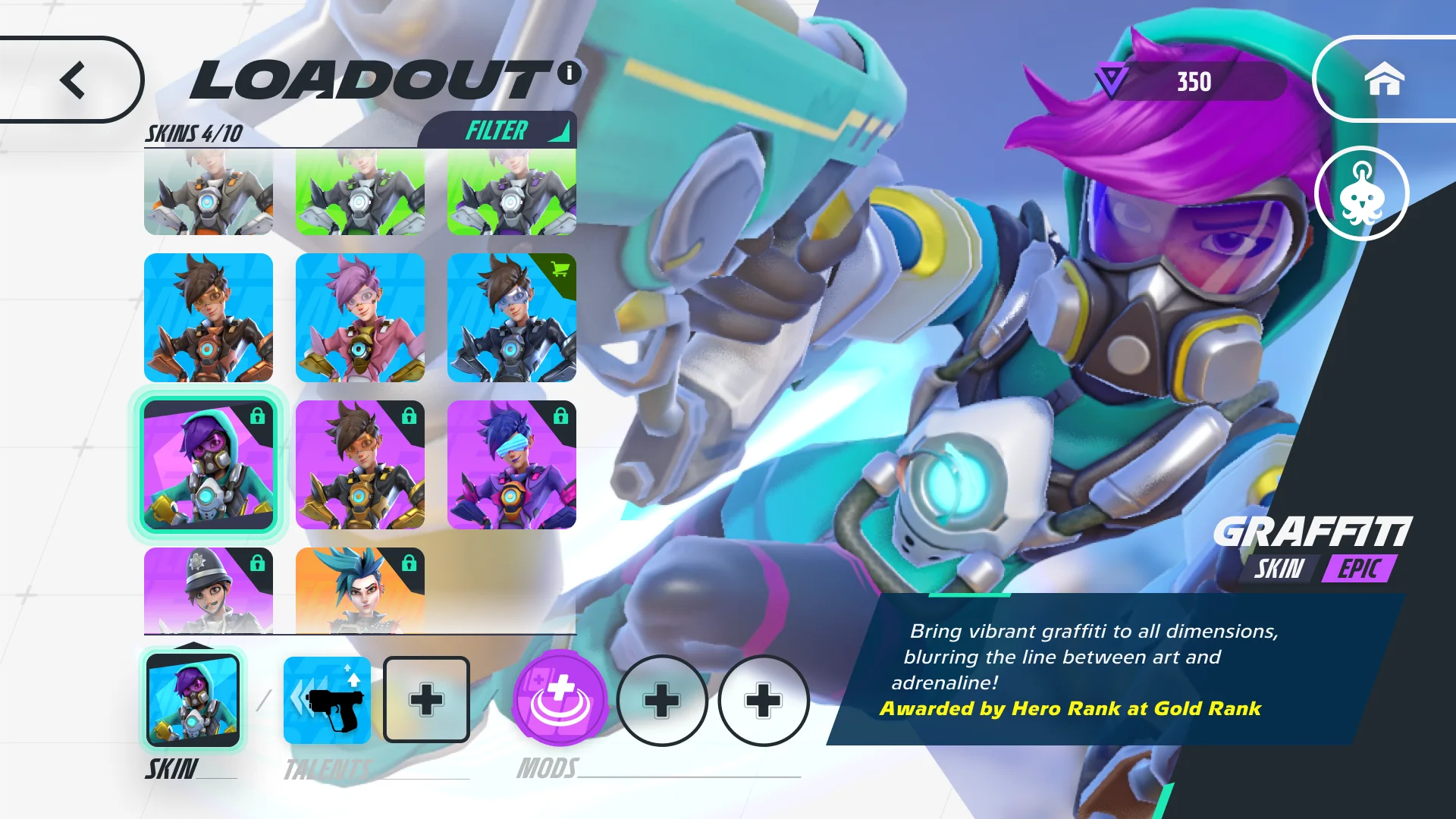
Most heroes play very similarly to their core versions. Reaper still uses his Hellfire Shotguns, can enter Wraith Form, and unleashes Death Blossom as his ultimate. However, the top-down perspective changes how some abilities feel in practice.
Mercy, in particular, has been reworked. Instead of relying primarily on her Caduceus Staff, she now uses her blaster as her main attack, leaning more into a self-sufficient “Battle Mercy” style. Her Guardian Angel ability has also been adjusted so she can dash in a chosen direction rather than locking onto a specific ally.
Reinhardt’s shield, meanwhile, appears larger and curved in this version, likely to better suit the faster, tighter mobile maps.
The team has said its goal is eventually to include the full Overwatch roster, though that will come over time.
Progression, Skins, And Monetisation
Overwatch Rush includes a system of Mods and Talents. Mods act as general stat boosts, improving things like attack, speed, or defence across characters. Talents are hero-specific and enhance certain playstyles, such as giving Tracer additional self-sustain when using Blink.
As players use a hero, they increase their Mastery level and unlock more Mods and Talents. This adds a layer of progression without fundamentally altering each hero’s core identity.
Cosmetics are also a big part of the package. Rush features both redesigned versions of existing skins and entirely new ones, including crossover designs like Pharah’s Inarius skin inspired by Diablo. Blizzard has not yet confirmed pricing.
In terms of monetisation, Blizzard says Overwatch Rush will be free-to-play with optional in-app purchases focused on cosmetics. The studio stated that player skill should remain the deciding factor in matches, and that monetisation elements may be adjusted during testing based on feedback.
Testing Plans And Release Window
There is currently no release date for Overwatch Rush. Blizzard is preparing to test the game in select countries and regions, and has directed interested players to its official Discord for updates.
The studio has indicated that a lengthy testing period is likely, and that players should not expect a full 1.0 launch anytime soon. Given how early the build appears to be, further changes to heroes, balance, progression, and monetisation are almost certain.
Whether it becomes a daily mobile habit for fans or simply a side experiment, it’s a notable step for the franchise.