

A Long-Awaited Comeback
Samus Aran is back, and Metroid Prime fans finally have the return they have been waiting nearly two decades for. Metroid Prime 4: Beyond marks the first new entry in the series since 2007, arriving on both the Nintendo Switch and Switch 2. After years of delays, rumours of development troubles, and even a full reboot at Retro Studios, expectations could not be higher.
The result is an atmospheric sci-fi adventure that blends the franchise’s classic exploration with bold new ideas. It is also a game unafraid to feel retro, even when that comes with a few rough edges.
Classic Metroid Atmosphere From the First Step
Prime 4 opens in a frozen research lab, where Samus’s metal boots echo across rows of cryogenic pods. Every creak and rumble feels like a monster about to burst free, instantly capturing the iconic isolation and tension Metroid Prime fans know so well.
Samus’s dual-stick and motion-aim controls feel intuitive, especially on Switch 2 where players can point the remote at the screen or even rest it on a surface for mouse-like precision. Her classic abilities return, from scanning environments to morphing into a ball, but this time they’re joined by striking new psychic powers that add pulsing purple energy to her suit. Screenshots of these moments practically take themselves.
Between abandoned facilities, Samus rides across deserts, lava fields, and sandstorms on a futuristic shifting motorcycle. The bike, Vi-O-La, introduces an open-world flavour that feels inspired by long-dormant Nintendo series like F-Zero or Star Fox. Flying enemies even appear in formation, waiting for players to lock on and fire a disc of laser energy through them.
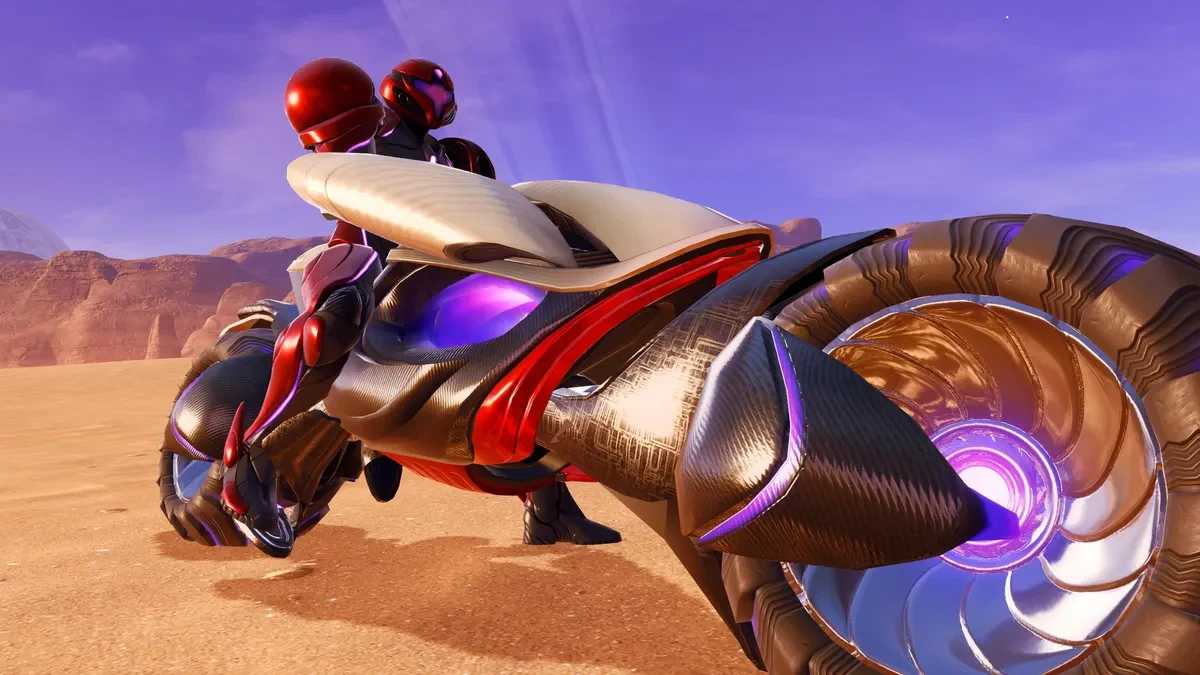
Image Credit: Nintendo
A Return to Prime’s Roots
Despite new layers, Metroid Prime 4 leans heavily into nostalgia. Exploration unfolds at a slow and deliberate pace. Gadgets unlock one by one. Boss fights explode into frantic showdowns after long stretches of quiet, eerie isolation. The Psychic Visor returns scanning to the forefront, turning every room into a puzzle of clues, artefacts, and alien data.
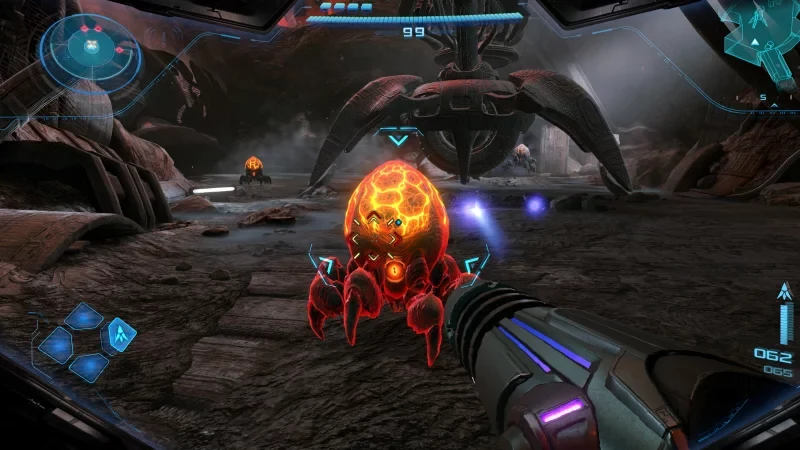
Image Credit: Nintendo
For many players, this throwback feel is a strength. After 18 years away, the classic Prime structure feels comforting rather than dated. Walking instead of fast-travelling, scanning instead of skipping, and exploring instead of rushing all feel like deliberate creative choices rather than old habits.
Side Characters That Don’t Quite Fit
Not everything clicks. The most divisive addition is a group of chatty side characters who often interrupt the solitude that defines the series. Early in the game, Samus meets a rescued engineer named Myles MacKenzie, whose quippy commentary sparked backlash during previews. The good news is he vanishes after the opening stretch, staying behind at base camp for the rest of the story.
Unfortunately, other companions appear later on and can be just as intrusive. Their constant awe at meeting Samus becomes repetitive, and their advice sometimes breaks the flow of exploration. While their presence pushes Metroid in a more mainstream, cinematic direction, it occasionally feels at odds with the quiet tension that makes the series special.
A Beautiful Yet Uneven Overworld
Prime 4’s overworld planet, Viewros, is a vast desert broken into disconnected regions. Some areas are haunting and memorable, but the long travel sequences can feel empty and repetitive, especially later in the game. The wide open spaces offer secrets and shrines to uncover, but many players may prefer the tighter, more claustrophobic designs of older Prime entries.
On the technical side, however, Beyond is stunning. On Switch 2, players can choose a smooth 60fps experience or a blistering 120fps mode at a lower resolution. Colours shimmer, particles drift through the air, and the choir-layered soundtrack adds cinematic weight to every corner of the planet.
When the Game Stumbles
Metroid Prime 4 is ambitious, but not always to its benefit. The early hours are linear and overloaded with tutorials, including a lengthy motorcycle lesson that slows the pacing. Its autosave system can be unforgiving, occasionally forcing players to repeat long sections after a single mistake. And for some fans, the emphasis on combat over puzzle solving marks a shift away from what made Prime unique.
These frustrations add up, particularly for players expecting a seamless evolution of the classic formula.
A Reunion Tour, Not a Reinvention
The best way to describe Metroid Prime 4: Beyond is as a reunion tour. It brings back everything fans loved about the trilogy, wrapped in upgraded visuals and a few experimental ideas. Some new additions work beautifully, while others miss the mark.
If this game had launched in 2010, its old-school design might have felt outdated. In 2025, however, its slower pacing and methodical exploration feel like a refreshing break from modern open-world excess. For long-time fans, Beyond will feel like a homecoming. For newcomers, it may be a harder sell.
Metroid Prime 4: Beyond releases 4 December with a recommended price of £58.99.