
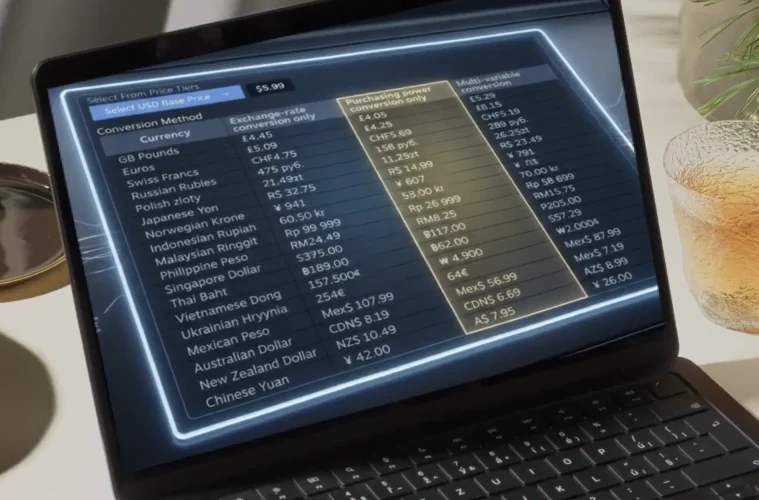
If you’ve ever wondered why a game costs wildly different amounts depending on where you live, Valve Corporation has finally stepped in with a fix, or at least a better system to handle it.
A new Steam update introduces improved regional pricing tools for developers, aiming to make game prices fairer across 35 currencies and multiple regions. While the changes are aimed at developers behind the scenes, they could have a noticeable impact on what players actually pay.
Steam Updates Regional Pricing Tools Across 35 Currencies
At its core, the update refreshes Steam’s pricing conversion data to better reflect current global market conditions. That might sound minor, but it addresses a long-running issue where prices in some regions didn’t align with local economies.
Steam already supports 35 currencies and 4 regional groupings, but many developers rely on its built-in tools to set prices rather than manually adjusting every region. Valve says the updated data is designed to help studios land on prices that better match local expectations.
Importantly, nothing changes automatically. Existing game prices stay exactly the same unless developers choose to update them.
Three New Ways Developers Can Set Prices
Alongside the updated data, Valve has introduced three different pricing conversion methods, giving developers more flexibility depending on how they want to approach global pricing.
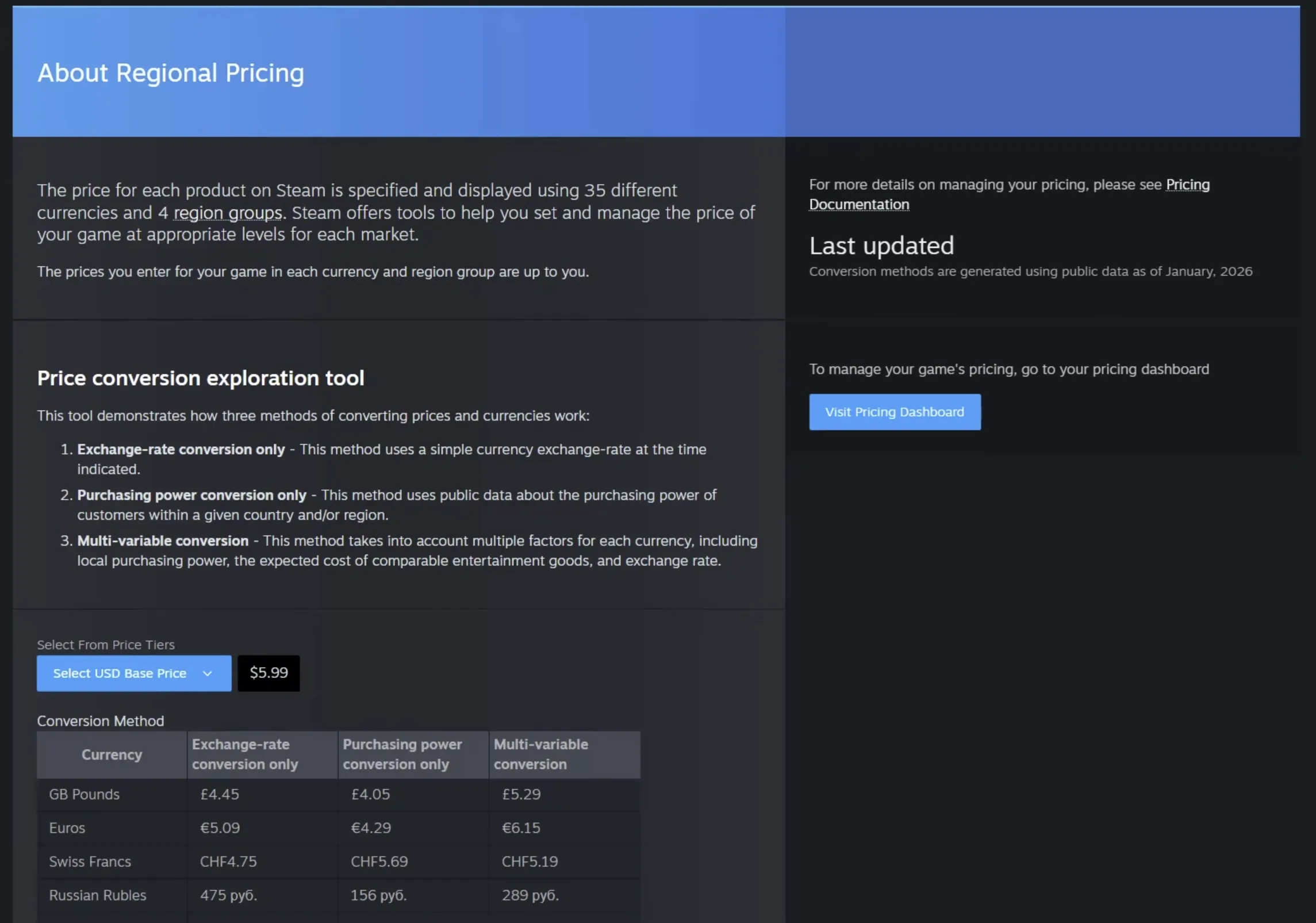
Image Credit: Valve
Exchange Rate Conversion
This is the most straightforward option. It converts a USD price directly into other currencies using current exchange rates.
It’s simple and predictable, but it doesn’t account for differences in income or cost of living between countries.
Purchasing Power Conversion
This method looks at what people in a specific country can realistically afford, using public data about average purchasing power.
In practice, this can lead to lower prices in regions where incomes are lower, making games more accessible.
Multi-Variable Conversion
This is the most complex option, combining exchange rates, local purchasing power, and the cost of similar entertainment in each region.
Valve says this is closest to how its previous system worked, but now it’s more transparent and adjustable.
Developers can also mix these methods or ignore them entirely and set prices manually, depending on their strategy.
Why This Update Was Needed
The changes come after months of complaints from players in countries like Poland and Argentina, where games were sometimes priced 20 to 30 percent higher than their US equivalents after conversion.
That gap wasn’t just a rounding error, it became a consistent frustration for players who felt they were overpaying compared to other regions.
Some developers had already started fixing things themselves. Studios like Embark and Nihon Falcom manually adjusted prices across multiple regions, but that approach wasn’t scalable across thousands of games.
Valve’s update is essentially a system-level fix, giving developers better tools so they don’t have to guess or manually correct prices one by one.
What Players Should Expect Next
Even though the new tools are live now, players shouldn’t expect instant price changes.
Developers still need to actively update their pricing for the new system to take effect. That means any improvements will likely roll out gradually over the coming weeks or months as studios revisit their pricing.
There’s also a catch. If a developer increases a game’s price in any region, it triggers a 30-day cooldown before that game can go on sale again, which could delay when changes are applied.
Valve has confirmed it will also be updating prices for its own games as part of this rollout.
What This Means For Future Game Pricing
For players, this update could lead to more consistent and fair pricing globally, especially in regions that have historically paid more than expected.
For developers, it removes a lot of guesswork and replaces it with clearer data and flexible tools.
The bigger picture is that pricing on Steam is becoming more dynamic and data-driven. As market conditions change, so will the recommendations behind the scenes, which means game prices might become more fluid over time rather than staying fixed for years.