
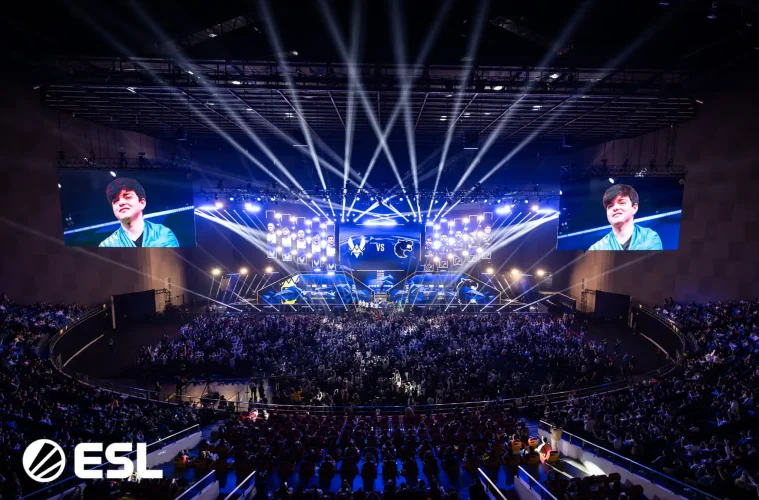
ESL have confirmed IEM Beijing 2026 as the closing event on the 2026 Counter-Strike calendar, locking the tournament in for 2 to 8 November at the Bloomage Biotech Biohyalux ECM Arena. The 16-team field will compete for a share of the $1,250,000 prize pool inside an 18,000-seat venue, marking the first time Intel Extreme Masters has returned to China’s capital since 2019.
We’re bringing a new dynasty of Counter-Strike to China 🇨🇳#IEM Beijing 2026 🏆
🏟️ Bloomage Biotech·Biohyalux ECM Arena
⚔️ EPT Masters with 16 teams
💰 $1,250,000 total winnings
📅 November 2 – 8, 2026 pic.twitter.com/byaN1Bekev— ESL Counter-Strike (@ESLCS) May 25, 2026
The announcement, made public this week, also confirms a 360-degree stage layout, a setup ESL has reserved for only its highest-profile recent productions. Fans will be welcomed inside the venue across both the group stage and the playoffs, with the tournament drawing the curtain on a year in which ESL has restructured the spine of its Counter-Strike circuit.
ESL Returns to Beijing After Seven Years
The gap between Beijing visits is the most striking detail of the announcement. ESL last brought Intel Extreme Masters to China’s capital in November 2019, when Astralis closed out a grand-final win over 100 Thieves and Danish in-game leader Lukas “gla1ve” Rossander walked away with the MVP medal. The 2019 edition delivered one of the defining moments of the late CS:GO era, and it remains the only IEM Beijing event in the brand’s history until November.
China’s IEM footprint in the years since has been written almost entirely in Chengdu and Shanghai. Beijing sat out the back half of CS:GO, the Source 2 transition, and the first three full years of CS2 competition. The seven-year gap means an entire generation of Counter-Strike has cycled through without an IEM stop in the capital. Players who were teenage prospects when Astralis lifted the trophy are now established veterans, and the rosters that defined that final have long since dissolved.
The 2019 result is also a reminder of how thoroughly the competitive landscape has reshuffled. Astralis arrived in Beijing in the back end of the era that established the side as the most dominant lineup in Counter-Strike history, and 100 Thieves’ run to the grand final was the high-water mark for an Australian roster that has not returned to that level since. Neither organisation fields a top-tier CS2 side in the 2026 cycle, leaving the bracket in Beijing wide open for a new generation of contenders to write the next chapter of the venue’s history.
The 360-Degree Stage At Bloomage Biotech ECM Arena
The 360-degree stage is the headline production decision for the November event. ESL have only deployed a full in-the-round setup once in recent memory, at IEM Rio, where the format pulled the crowd into the action on all four sides of the server. Bringing the same staging to Beijing signals that ESL view IEM Beijing 2026 as a flagship production rather than a routine season-closer, and that the company is prepared to commit to a more expensive build for the return to China.
The Bloomage Biotech Biohyalux ECM Arena anchors the event. The venue carries a peak capacity of around 18,000 seats, putting IEM Beijing 2026 in the same arena-tier conversation as IEM Cologne and IEM Katowice in terms of crowd ceiling. ESL have confirmed that fans will be inside the building for the group stage as well as the playoffs, a choice that mirrors recent IEM season-closers and rules out the studio-only group format that some second-tier events have used.
Sixteen Teams, $1.25 Million On The Line
The 16-team field will be set entirely through the Valve Regional Standings, with invitations issued to the highest-ranked sides at the cutoff. VRS-only invitations remove the closed-qualifier route that ESL retired across the 2026 cycle, putting every roster’s ranking work across the year directly on the line for a place in Beijing. The $1,250,000 prize pool aligns IEM Beijing 2026 with the EPT Masters tier on ESL’s calendar, sitting alongside the year’s other top-flight stops and clear of the smaller Challenger-level events. The split between champion and the lower placements will follow the standard EPT Masters distribution.
The group stage runs from 2 November, with the 16 teams divided into two eight-team double-elimination brackets. The format gives every roster a margin for error in the opening rounds. A single loss does not end a campaign, and the highest-placing sides from each bracket carry through to the playoffs. The bracketing approach matches the structure ESL have used at IEM Cologne and IEM Katowice across the 2026 cycle, keeping the route from group stage to grand final consistent for teams that have already played the year’s earlier stops.
The Last Six-Team Playoffs Of An Era
One of the more consequential confirmations buried in the announcement is that IEM Beijing 2026 will be the final ESL event run with a six-team playoffs bracket in Counter-Strike 2. ESL have already signalled that future Intel Extreme Masters tournaments will move to an eight-team playoffs, aligning the brand with PGL’s existing structure and giving two additional sides a route into the final stage.
The shift to eight-team playoffs is one of the bigger structural changes ESL have committed to since the launch of CS2, and it will reshape the path through the year’s biggest events from the start of the 2027 calendar. For Beijing specifically, the six-team format means the group stage retains a sharper cut. Only the top three from each eight-team double-elimination bracket advance, leaving five sides eliminated before the playoff stage begins. The closing weekend in Beijing will therefore carry a structural significance beyond the trophy itself: it is the last time the six-team bracket runs on an ESL CS2 stage.
How IEM Beijing 2026 Closes The Year
IEM Beijing 2026 sits as the final stop on ESL’s 2026 Counter-Strike calendar, closing out a year that has included IEM Katowice, IEM Cologne, and the rest of the EPT Masters slate. The November window puts the event after the final Valve Regional Standings cutoff that will feed into the early 2027 schedule, which sharpens the stakes for any team chasing a strong VRS position heading into the new year. A deep run in Beijing carries weight beyond prize money. It shapes invitation lists for the events that follow.
For the Chinese scene, the return of IEM is a notable moment in its own right. Beijing has not hosted a top-tier international Counter-Strike event since the 2019 visit, and the local viewership built around TYLOO and the wider Asian competitive circuit has waited the full seven-year stretch for an IEM stop to return. The 360-degree stage and 18,000-seat venue point to ESL treating the return as a statement event rather than a quiet calendar entry.
What Comes Next For IEM Beijing 2026
The team list, broadcast details, ticket on-sale window, and signing-session schedule have not yet been released. ESL have confirmed that those details will be revealed closer to the event, with the VRS cutoff that locks in the invited sides still some months away from the November dates. The full bracket draw and group composition will follow once the invitations are issued.
The opening day of IEM Beijing 2026 lands on 2 November, with the grand final scheduled for 8 November at the Bloomage Biotech Biohyalux ECM Arena.