
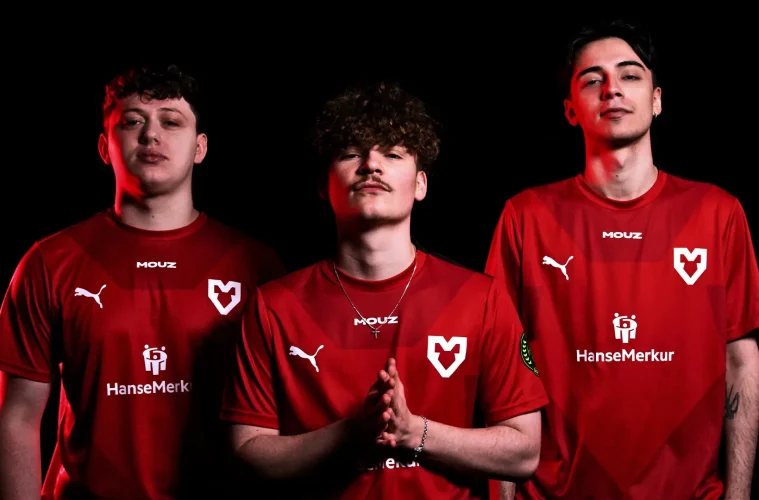
German esports organisation MOUZ has officially announced its departure from VALORANT, bringing an end to its four year run in Riot Games’ tactical shooter. The decision was shared in a public statement on the team’s social media channels on December 19, 2025.
An update on our future in VALORANT. pic.twitter.com/GGTtGX6RyL
— MOUZ (@mousesports) December 18, 2025
In the post, MOUZ explained that the current structure of the VALORANT Champions Tour does not align with the organisation’s long term goals, and that it no longer sees a clear place for itself within the existing ecosystem.
Why MOUZ Is Leaving VALORANT
“We have made the decision to not continue with VALORANT,” the statement reads. “The current VCT format does not align with our ambition as a team, and we do not see a place for us in the current ecosystem.”
The organisation also thanked its partners, players, and coaching staff for their support and dedication throughout its VALORANT journey, which has spanned the past three years of competition.
While the announcement did not reference any specific internal issues, the message points squarely at the structure of the VALORANT Champions Tour as the main reason behind the decision.
A Strong Run in Tier Two Competition
MOUZ entered the VALORANT scene in 2022 and spent most of its time competing in the DACH Challengers circuit. During that period, the team was a consistent domestic contender and regularly pushed for a spot at Ascension.
The organisation enjoyed several notable results, including winning VALORANT Challengers 2024 DACH Evolution Split 2 and qualifying for VCT Ascension EMEA 2024. However, its Ascension campaign ended in a fifth to sixth place finish, falling short of promotion to tier one.
Those results highlighted the razor thin margins that define the current pathway to the top level of VALORANT esports.
Ongoing Concerns Around the VCT Ecosystem
MOUZ’s exit adds to a growing list of organisations questioning the sustainability of VALORANT’s tier two scene. Under the current VCT model, teams outside the partnered leagues operate with limited competitive windows, smaller prize pools, and a single promotion route through Ascension.
For organisations, this often means long term investment without guaranteed stability or access to revenue sharing unless promotion is achieved.
Concerns around the economic viability of the system have been raised repeatedly across the scene. In 2024, the VALORANT Players Association warned that the future of tier two competition “hangs in the balance,” citing low returns on investment, reduced calendars, and limited financial incentives.
Riot Games’ Response and What Comes Next
Publisher Riot Games has taken steps to address these concerns. Earlier this year, Riot confirmed it would allow betting sponsorships across VALORANT and League of Legends esports in North America and EMEA, stating that part of the revenue generated would be reinvested into the tier two ecosystem.
Planned investments include increased prize pools and expanded development initiatives, though MOUZ’s decision suggests that, for some organisations, these measures have not yet shifted the overall risk reward balance.
For now, MOUZ’s focus appears to be firmly on other titles within its competitive portfolio, as the organisation steps away from VALORANT with no immediate plans to return.