
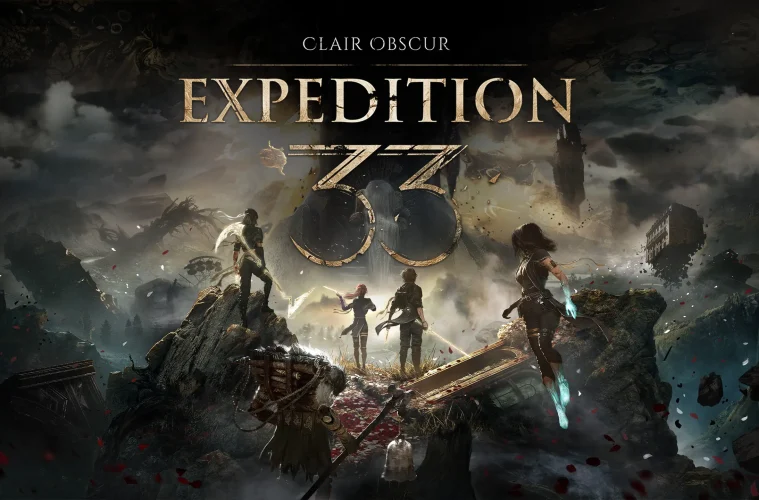
The Indie Game Awards 2025 have officially stripped Clair Obscur: Expedition 33 of its major wins after confirming the game used generative AI during development. As a result, the Game of the Year award has now been reassigned to Blue Prince, while Sorry We’re Closed takes home Debut Game.
The IGAs Nomination Committee is officially retracting Debut Game and Game of the Year, awarding both categories to new recipients. Additionally, we are retracting one of the Indie Vanguard recipients.
Full details can be found in our FAQ under Game Eligibility: www.indiegameawards.gg/faq
— The Indie Game Awards (@indiegameawards.gg) December 21, 2025 at 1:45 AM
The decision has reignited debate around AI use in game development, especially as more studios experiment with the technology behind the scenes.
What Happened at the Indie Game Awards 2025
The Indie Game Awards took place on December 18, where Clair Obscur: Expedition 33 initially won both Game of the Year and Debut Game. However, just days later, the organisers behind the event, Six One Indie, announced that those awards had been rescinded.
According to an official statement, Sandfall Interactive confirmed on the day of the show that generative AI had been used during development. This directly contradicted the declaration made during the submission process, where representatives had agreed that no gen AI tools were involved.
“The Indie Game Awards have a hard stance on the use of gen AI throughout the nomination process and during the ceremony itself,” the statement read. “In light of Sandfall Interactive confirming the use of gen AI art in production, this does disqualify Clair Obscur: Expedition 33 from its nomination.”
Why Gen AI Meant Automatic Disqualification
The Indie Game Awards’ eligibility rules are clear. Any use of generative AI, even in a limited or placeholder capacity, makes a game ineligible. While some AI generated assets in Clair Obscur were reportedly patched out shortly after launch, their inclusion at release was enough to breach the rules.
Sandfall Interactive had previously acknowledged minimal AI use in interviews earlier in the year. In a June conversation with Spanish outlet El País, producer François Meurisse said the studio used “some AI, but not much,” describing it as a small part of the production process rather than a creative replacement for artists.
Despite this clarification, Six One Indie confirmed that any AI use, regardless of scope or intent, remains incompatible with the awards’ criteria.
The decision has sparked wider discussion online, with one viral image shared by @hazy2go summing up what they called the “current gaming and AI situation,” highlighting how quickly public perception can shift once AI involvement is revealed.
current gaming/ai situation pic.twitter.com/CA3OudQ9wp
— hazy (@hazy2go) December 19, 2025
Blue Prince and Sorry We’re Closed Take the Spotlight
With Clair Obscur disqualified, the Indie Game Awards followed their standard process of awarding prizes to the next highest ranked nominees.
That decision sees Blue Prince crowned Indie Game of the Year, while Sorry We’re Closed receives the Debut Game award. Developers from both teams have been invited to record acceptance speeches, which are expected to be shared in early 2026.
A Bigger Industry Debate Around AI
The controversy arrives at a time when AI in game development is already under heavy scrutiny. Studios across the industry remain split, with some supporting AI for early concept work, while others oppose its use in creating final assets.
Recent comments from figures such as Swen Vincke and Bruce Straley have highlighted how divided opinions remain. Six One Indie has firmly placed itself on the side of protecting human made art, drawing a clear line that leaves no room for generative AI in award eligible games.
Clair Obscur’s Success Remains Untouched Elsewhere
While the Indie Game Awards decision is significant, it does not affect Clair Obscur: Expedition 33’s wider success. The game had a massive showing at The Game Awards 2025, winning nine awards from twelve nominations, including Game of the Year, Best Narrative, Best Art Direction, and Best RPG.
For now, the situation leaves the industry at a crossroads. Clair Obscur’s case shows that a game can achieve critical and commercial success, yet still face consequences as award bodies set firmer boundaries around the use of AI tools.