
World of Warcraft Revenue: How Much Money Has WoW Made? Statistics

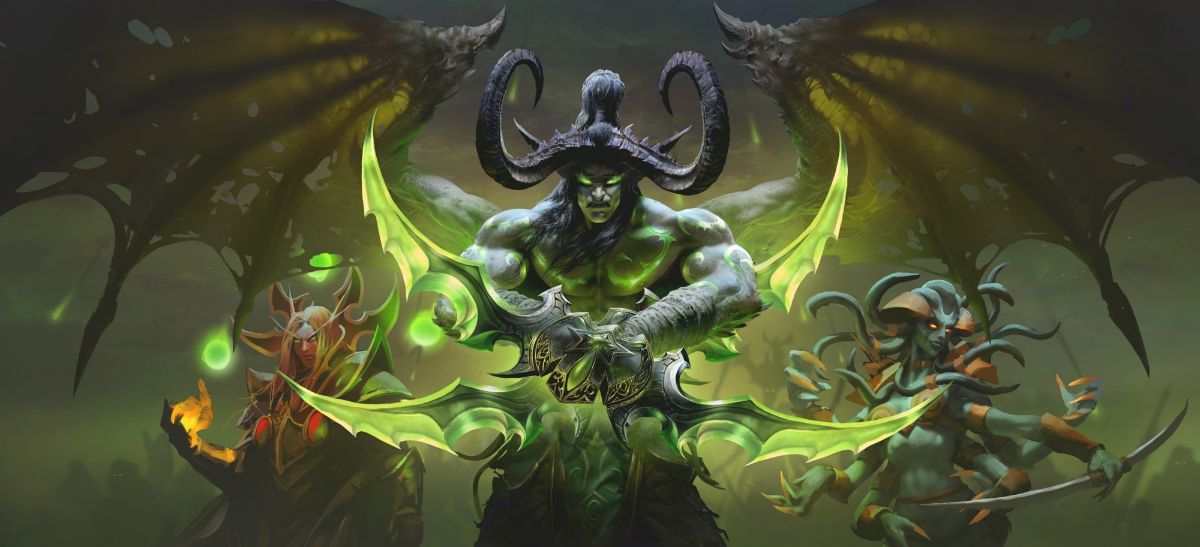
World of Warcraft is one of the highest-grossing video games ever made, yet putting an exact figure on it is genuinely hard because no owner has ever published a standalone WoW revenue line. The most-cited numbers, an estimated ~$9 billion in lifetime WoW revenue inside a ~$15 billion Warcraft franchise total, come from analyst firms and stats aggregators rather than audited disclosures, and this page separates what is confirmed from what is estimated. Free to use with a link back to ShaneTheGamer as the source.
Key Takeaways for Journalists
- ~$9 billion estimated lifetime WoW revenue, sitting inside a wider Warcraft franchise total of roughly $15 billion through 2025, per aggregated third-party estimates.
- ~$1.23 billion peak annual revenue in 2010, the year Blizzard confirmed a record 12 million subscribers, according to SuperData Research estimates.
- ~$680 million estimated in 2024, up about 12% year over year, driven by The War Within launch and steady retention, per independent modelling.
- $14.99 monthly subscription since 2004, the US price that has never changed in more than 20 years of operation.
- $9.23 billion cumulative by January 2017, the SuperData figure that made WoW the highest-grossing video game of all time at that point.
- No official standalone WoW figure exists, because Activision Blizzard always folded WoW into a broader Blizzard segment and Microsoft has done the same post-acquisition.
- China returned in summer 2024, with NetEase reporting WoW daily active users up 50% versus pre-shutdown levels, adding fresh revenue momentum.
- Microsoft gaming hit $23.45 billion in fiscal 2025, an all-time high, with WoW repeatedly named among the Activision Blizzard franchises driving that growth.
- $20 WoW Token, Blizzard’s official real-money-to-gold bridge, remains a core monetisation layer alongside the subscription and the in-game shop.
- 3.7 million Shadowlands copies day one in 2020, the fastest-selling PC game at the time, showing how expansion launches spike revenue.
The Headline Number: How Much Has WoW Made?
The single most durable figure in WoW’s financial history is the January 2017 SuperData estimate that the game had earned around $9.23 billion in cumulative revenue, a total that made it the highest-grossing video game of all time at that point. That number is echoed by Wikipedia’s Blizzard game list, which notes WoW passed roughly US$9 billion in revenue as of 2017 alongside more than 100 million lifetime accounts.
Aggregator sites tracking the topic in 2026 broadly converge on the same shape. Multiple 2026 statistics roundups state that the Warcraft franchise has earned roughly $15 billion in lifetime revenue through 2025, with WoW itself accounting for approximately $9 billion of that figure. Those franchise totals include Warcraft strategy games and the 2016 film, which grossed over $400 million on its own, so the WoW-specific slice is the number journalists should quote.
It is worth stressing the sourcing hierarchy here. The ~$9 billion WoW figure traces to SuperData (later part of Nielsen) and to secondary aggregation of that work. Everything more recent than 2017 is estimate stacked on estimate, because Activision Blizzard never broke out WoW in its filings and Microsoft has not done so since closing its acquisition. Treat the ~$9 billion and ~$15 billion figures as soft, widely-repeated approximations rather than audited fact.
The Peak Year and the Long Decline
WoW’s financial high water mark came in 2010. SuperData Research estimated the game pulled in about $1.23 billion that year, coinciding with Blizzard’s October 2010 announcement that the subscriber base had passed 12 million players worldwide. GameRevolution framed the same peak differently, noting that at more than 12 million paying customers, WoW was generating on the order of $180 million per month in subscription revenue, or roughly $2.15 billion per year at the subscription line alone.
From there the trajectory was a long, jagged decline as players drifted between expansions. Activision Blizzard’s own quarterly reporting showed WoW down to 10.3 million subscribers by late 2011, a loss of nearly 2 million from the 2010 peak. SuperData estimates tracked monthly revenue falling from roughly $204 million in September 2012 to about $93 million by April 2013, a 54% drop as the game shed more than a million subscribers in seven months.
Even in decline, WoW remained enormous. CNBC reported that by the third quarter of 2014 WoW still had more than 7.4 million subscribers, up from 6.8 million the previous quarter ahead of the Warlords of Draenor expansion. The game’s revenue has since become expansion-cyclical: big spikes at each launch followed by content-drought troughs, a pattern SuperData flagged repeatedly and which still defines WoW’s earnings shape today.
Blizzard stopped publishing subscriber counts after 2015, when the last confirmed figure was around 5.5 million. That silence is why every WoW-specific dollar amount since then is an outside estimate rather than a company disclosure.
The Modern Revenue Picture
With subscriber numbers hidden, revenue has become the more meaningful health indicator, and independent modelling suggests the 20-year-old MMO generated an estimated $680 million in 2024, a roughly 12% year-over-year increase. That figure is attributed across several 2026 aggregators to the combined effect of The War Within’s August 2024 launch and steady Dragonflight subscriber retention heading into the year.
Older third-party estimates for the immediately preceding years put WoW at roughly $470 million to $500 million in 2022 and around $635 million in subscription revenue for 2023, which lines up with the reported 2024 uptick. On a per-day basis, community analyses have pegged WoW at well over $1 million daily in recent years, and closer to $1.7 million per day from subscriptions alone in 2023 by one user calculation.
One structural point matters for anyone comparing WoW to rivals. WoW sells through Blizzard’s own Battle.net storefront, so Blizzard keeps the full retail cut, whereas Steam-based competitors pay roughly 30% off the top. That means gross-sales league tables tend to understate WoW’s net contribution. Newzoo’s 2026 reporting has continued to place WoW among the top PC titles by revenue, riding the Midnight expansion cycle.
How WoW Actually Makes Money
WoW’s core business model is almost old-fashioned by live-service standards: a flat monthly subscription of $14.99 in the US, unchanged since the 2004 launch. That choice let Blizzard avoid the aggressive microtransaction shops of many free-to-play rivals, at the cost of a smaller potential install base. Even so, the subscription remains the backbone of WoW earnings.
On top of the sub sits the in-game shop, which sells cosmetic mounts, pets and character services such as faction and race changes. Individual store items can be surprisingly lucrative: the Trader’s Gilded Brutosaur, priced at $90, has been called the most expensive single item Blizzard has ever sold, with Wowhead-style community estimates suggesting it earned well into eight figures. The Brutosaur’s return in the Midnight cycle even spiked the WoW Token market, according to trackers.
The third pillar is the WoW Token, Blizzard’s official bridge between real money and in-game gold. Players buy a Token from the shop for $20 in the Americas or €20 in Europe, then either apply it as 30 days of game time or convert it to $15 of Battle.net Balance spendable across Blizzard’s ecosystem. The gold price of a Token floats with supply and demand: as of late August 2026 the US Token sat in a roughly 257,000 to 273,000 gold band, spiking around the return of the Brutosaur bundle and the Patch 12.1 season reset.
Finally there are the expansions themselves. Midnight, WoW’s eleventh expansion, launched on March 2, 2026 and shipped at three tiers: a $49.99 Base edition, a $69.99 Heroic edition and an $89.99 Epic edition. Each expansion launch functions as a discrete revenue event on top of the recurring subscription and shop income.
| Revenue stream | Price / model | Notes |
|---|---|---|
| Monthly subscription (US) | $14.99 | Unchanged since 2004 launch |
| WoW Token (Americas) | $20 real money | Redeems as 30 days game time or $15 Balance |
| Midnight Base edition | $49.99 | Eleventh expansion, March 2, 2026 |
| Midnight Heroic edition | $69.99 | Mid-tier bundle |
| Midnight Epic edition | $89.99 | Top-tier bundle |
| Trader’s Gilded Brutosaur mount | $90 | Most expensive single shop item |
The China Factor
China has always been an outsized part of WoW’s economics. At the 2010 peak of 12 million total subscribers, roughly 5.5 million were in Asia, and Chinese WoW players alone were estimated at around 5 million in 2009 after NetEase became the local publisher. That is why the January 2023 shutdown, when Blizzard’s licensing deal with NetEase expired and services went offline, mattered so much: reports at the time said over 1 million users applied for refunds.
The feud ended in April 2024, when NetEase, Blizzard and Microsoft Gaming announced a renewed publishing agreement to bring WoW, Hearthstone and other Blizzard titles back to mainland China over the summer of 2024. The response was immediate, with over two million players pre-registering for the returning servers within two days of the announcement.
The financial impact showed up in NetEase’s own reporting. In its Q3 2024 results, NetEase said WoW saw a 50% increase in daily active users versus pre-shutdown levels, while Hearthstone jumped 150%, describing the return as reigniting historic levels of player enthusiasm. NetEase’s Q4 2024 call credited the Blizzard relaunch with driving record engagement, part of a games segment that hit a record RMB 83.6 billion for the year.
Inside Microsoft’s Numbers
Since Microsoft closed its $68.7 billion acquisition of Activision Blizzard in October 2023, WoW revenue has been buried inside Microsoft’s gaming division rather than reported separately. The scale of that division is still instructive. In the first full quarter after the deal, Microsoft reported gaming revenue up $1.7 billion or 43%, with Xbox content and services up 61% driven by 53 points of net impact from the Activision Blizzard acquisition.
Across the full fiscal year, Microsoft’s gaming division reached an all-time high of $23.45 billion in fiscal 2025, up from $21.5 billion the prior year, with Xbox content and services up 16% and Activision Blizzard titles cited as a key driver. WoW is repeatedly named alongside Call of Duty and Diablo among the franchises powering that growth, though Microsoft never isolates the WoW line.
For historical context, before the acquisition Activision Blizzard’s Blizzard segment grew from $1.12 billion in 2013 to $1.72 billion in 2014, but that number carried Hearthstone, Diablo, Overwatch and licensing as well, so it was never a clean WoW figure. In the first half of 2023, the Blizzard segment generated $1.5 billion in net revenue. The lesson for reporters is consistent across every owner: WoW is unquestionably a multi-billion-dollar franchise, but no filing has ever published its exact, isolated revenue.
| Metric | Figure | Status |
|---|---|---|
| WoW cumulative revenue (Jan 2017) | ~$9.23 billion | SuperData estimate |
| WoW estimated lifetime (2025) | ~$9 billion | Aggregator estimate |
| Warcraft franchise lifetime (2025) | ~$15 billion | Aggregator estimate |
| WoW peak year revenue (2010) | ~$1.23 billion | SuperData estimate |
| WoW estimated 2024 revenue | ~$680 million | Third-party estimate |
| Microsoft gaming revenue FY2025 | $23.45 billion | Confirmed (Microsoft) |
WoW Versus the MMO Field
WoW’s revenue leadership is best understood against the wider MMO market. More than two decades after its November 2004 launch, WoW remains the most subscribed MMORPG in the world, a gap over rivals that stats aggregators describe as still broad in 2026. Its closest long-term challenger, Final Fantasy XIV, boasts more than 42 million registered accounts, though active daily players sit well below that headline.
The subscription model itself is now unusual. Most competitors run free-to-play structures, whereas WoW has held its recurring $14.99 fee, supplemented by the Token and shop rather than replaced by them. That mix produces steadier, less volatile revenue than pure free-to-play whales-and-conversions economics, at the cost of raw player count. For a sense of how competitive-gaming money compares, see our esports earnings statistics, where WoW’s own competitive circuit has distributed a comparatively modest sum.
The Midnight cycle suggests the franchise is stabilising rather than fading. The expansion drove a large Twitch viewership spike in its opening weekend, and the China return has added meaningful momentum. WoW in 2026 is not the cultural juggernaut it was in 2010, but revenue is growing again off a base most live-service titles would consider a major success.
Frequently Asked Questions
How much money has World of Warcraft made in total?
WoW has earned an estimated ~$9 billion in lifetime revenue, sitting inside a wider Warcraft franchise total of roughly $15 billion through 2025, though these are third-party estimates rather than audited figures.
What was World of Warcraft’s biggest revenue year?
WoW’s estimated peak was around $1.23 billion in 2010, the year Blizzard confirmed a record 12 million subscribers, according to SuperData Research.
How much does World of Warcraft make now?
Independent modelling estimates WoW generated about $680 million in 2024, up roughly 12% year over year, driven by The War Within launch and steady retention.
How much is a WoW subscription and has it changed?
The US subscription has been $14.99 a month since the 2004 launch, unchanged for more than 20 years, and remains the backbone of WoW’s revenue.
Does Microsoft report WoW revenue separately?
No. WoW is folded into Microsoft’s gaming division, which reached an all-time high of $23.45 billion in fiscal 2025, with WoW named among the driving franchises but never isolated.
Methodology & Sourcing
This page compiles the best-documented figures from company disclosures, analyst research and reputable trade coverage, and it clearly separates confirmed data from estimates. The only Blizzard-confirmed anchors are the 12 million subscriber peak (October 2010) and the ~5.5 million figure before reporting stopped in 2015; the ~$23.45 billion Microsoft gaming total for fiscal 2025 is a confirmed company disclosure. Every WoW-specific dollar amount, including the ~$9 billion lifetime, ~$1.23 billion 2010 peak and ~$680 million 2024 figures, is a third-party estimate (chiefly SuperData Research and 2026 statistics aggregators) and is labelled as such. Because no owner has ever isolated WoW revenue in a filing, readers should treat all WoW-only numbers as approximate ranges rather than audited fact, and where sources disagree we have flagged the spread.
Sources
- SuperData Research / Nielsen (via CNBC, GameRevolution, VentureBeat), 2014-2020
- Microsoft Investor Relations, FY2025 Q1 and Q4 earnings
- Activision Blizzard earnings reports, 2013-2023
- NetEase Q3 and Q4 2024 financial results and earnings call
- Wikipedia (Warcraft, Blizzard game list, Microsoft Gaming), 2026
- WoW Token trackers and Blizzard shop pricing, 2026
- Game World Observer and Windows Central, 2024-2025
- Third-party statistics aggregators (electroiq, coopboardgames, quantumrun, rec0ded88), 2026
Spotted a newer figure or an error? Contact the ShaneTheGamer desk and we will update this page.



Join the Conversation