
Star Wars: Galactic Racer (PC) Review

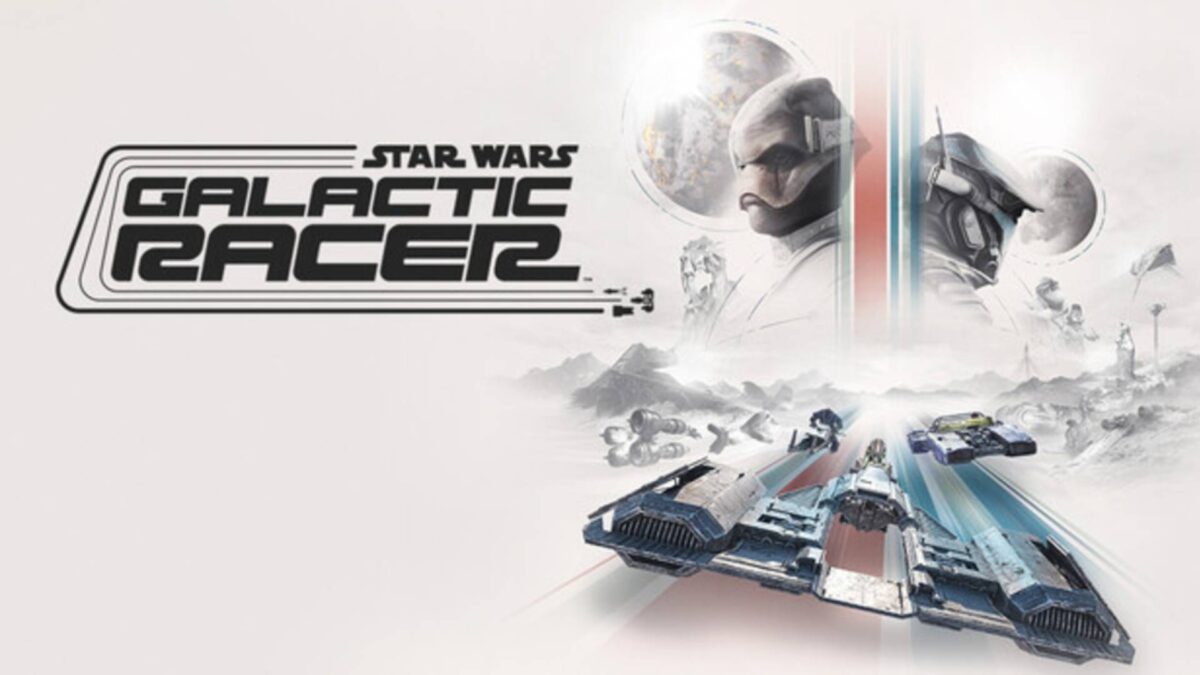
Podracing grows up, gets dangerous, and delivers one of the most exciting racing experiences in a galaxy far, far away
There’s something about podracing in Star Wars: Episode I – The Phantom Menace that has always made it one of the franchise’s most memorable sequences. The engines scream, the vehicles barely seem controllable, and one wrong move can turn a spectacular race into an explosion of expensive-looking scrap metal.
Now imagine building an entire racing game around that feeling, expanding it beyond Tatooine and giving the whole thing a competitive underground racing scene.
That’s essentially what Star Wars: Galactic Racer sets out to achieve. Developed by Fuse Games and published by Secret Mode, this isn’t another licensed racer relying on familiar characters and a Star Wars soundtrack to do all the heavy lifting. It’s an attempt to create a proper arcade racing game that just happens to take place in one of the most recognisable fictional universes ever created.
And surprisingly, it has a few tricks up its sleeve that make it considerably more interesting than simply racing from one checkpoint to the next.

Set after the fall of the Galactic Empire, Galactic Racer takes place in a period when the galaxy is rebuilding and the Outer Rim has become a breeding ground for underground entertainment, gambling and racing.
Enter the Galactic League, an unsanctioned racing circuit where syndicates bankroll competitors and pilots risk everything for money, reputation and glory.
You play as Shade, a helmeted human racer drawn into the competition with a personal score to settle. The central rivalry involves Kestar Bool, a powerful and thoroughly unpleasant champion whose influence extends well beyond the racetrack.
Shade’s journey is supported by Darius Pax, the League’s organiser, and Hibi, an Ardennian mechanic who helps prepare your vehicles. Familiar Star Wars character Sebulba also makes an appearance, connecting the new racing circuit to the podracing history fans already know.
It’s a straightforward revenge story, but it gives the racing a reason to exist beyond collecting trophies. There are rivalries to develop, characters to encounter and a championship to fight your way through.
More importantly, the game understands that you don’t need another galaxy-threatening superweapon to make a Star Wars story entertaining. Sometimes, all you need is a dangerous racing circuit and a champion who deserves to be knocked off his pedestal.
Here’s where Galactic Racer becomes genuinely interesting.

Rather than presenting a traditional championship in which you work through a fixed list of races, its main campaign uses a run-based structure inspired by roguelite games.
You progress through tours made up of different events, choosing your route and deciding which risks are worth taking. Some paths favour conventional races, while others offer elimination challenges, vehicle tests and unpredictable encounters.
Each decision affects your prospects, rewards and the condition of your vehicle.
Elimination events are particularly interesting. Competitors are knocked out as the race progresses, and you need to finish in the top three to survive. They’re riskier than ordinary races, but the rewards can make them worthwhile.
Then there are mystery encounters, which can introduce unexpected benefits or setbacks. You might secure a useful upgrade, save money on parts or find yourself dealing with a disadvantage you hadn’t planned for.
Crash too many times and your run comes to an end. You’ll have to start another attempt, although certain unlocks and benefits carry over to help you progress.
It’s a clever system because it makes each tour feel like a series of decisions rather than a checklist. Do you take the safer route and preserve your vehicle, or gamble on a difficult event that could give you the upgrades needed to survive later races?
That extra layer of strategy helps distinguish Galactic Racer from a conventional arcade racer.

Of course, the strategic stuff wouldn’t matter much if the actual driving wasn’t enjoyable. Thankfully, the different vehicle classes give the game a solid foundation.
There are four main types of craft to master.
Landspeeders are the heavier, more robust option. They’re relatively forgiving and can take more punishment, making them a sensible choice when you’re learning the tracks or trying to survive a particularly aggressive field.
Speeder bikes are faster and more delicate. Their narrow profiles and quick acceleration make them useful in tight sections, but collisions can be considerably more costly.
Skim speeders offer a more agile driving experience, using their distinctive sideways-tilting manoeuvres to negotiate tight corners. They’re particularly appealing if you prefer precision and technical handling.
Podracers are the real speed demons. They’re exceptionally fast, but their instability and fragility mean that even a relatively small mistake can end your race in spectacular fashion.
The important thing is that these aren’t merely different cosmetic designs. Each class has its own handling characteristics and abilities, so changing vehicles can force you to rethink your approach.
Podracing fans will probably gravitate towards the most explosive machines, but there’s a genuine argument for sticking with a more dependable landspeeder when a campaign run is on the line.

The driving is unapologetically arcade-focused.
You have an afterburner for short bursts of speed and a more powerful Ramjet boost that can deliver a substantial increase in velocity. The catch is heat management: push the Ramjet too hard and your vehicle can overheat and explode.
Learning when to accelerate, when to back off and when to save your boost becomes a major part of mastering the game.
There’s also a combat element. You can unlock and equip abilities such as shields, concussion mines and other tools that help you deal with rival racers. Depending on your build, you might focus on surviving collisions, improving your speed or making life difficult for anyone attempting to overtake you.
And yes, you can deliberately smash opponents into obstacles.
This is where the pedigree of Fuse Games becomes apparent. The studio was founded by veterans associated with Criterion and the Burnout series, and that influence is visible in the way collisions are presented.
A successful takedown can trigger a dramatic slow-motion view of a rival’s craft being reduced to wreckage.
It’s spectacular, but there’s an important distinction here: Galactic Racer isn’t simply Burnout with landspeeders. Racing and maintaining control remain central to the experience. Aggression is a useful tool, not a replacement for knowing where you’re going.
When everything comes together, the combination of high-speed cornering, carefully managed boosts and a perfectly timed takedown is enormously satisfying.

One of the game’s biggest strengths is its use of the Star Wars setting.
Rather than relying exclusively on generic science-fiction circuits, the game takes you across a range of planets, each with its own environmental hazards and visual identity.
Jakku brings the familiar desert landscape and the wreckage of Imperial Star Destroyers. Ando Prime introduces treacherous icy conditions, while Lantaana features lush jungle terrain and volcanic hazards. Other locations bring their own challenges, including industrial environments and dangerous caverns.
The scenery isn’t just decorative. Environmental conditions can affect your vehicle and force you to adapt.
On icy tracks, for example, heating tunnels can become important for keeping your craft operating properly. Other environments introduce hazards that can increase heat, damage your vehicle or punish you for taking the wrong line.
This makes learning a circuit about more than memorising corners. You need to understand the terrain, recognise dangerous sections and know when the fastest route might not be the safest.
The result is a racing game that feels connected to the wider Star Wars universe without needing to turn every event into a cinematic battle.
Racing games don’t always have the strongest stories. Too often, the characters are little more than names attached to rival cars, and the dialogue disappears into the background as soon as the lights turn green.
Galactic Racer makes a more substantial effort.
Between events, you can explore the paddock areas where racers gather, speak to characters, encounter rivalries and visit Hibi’s workshop to improve your craft.
These sections give the campaign some breathing room and help establish the personalities behind the competition. The presence of familiar Star Wars details also gives the world a sense of history that an entirely original racing universe would struggle to replicate.
Sebulba is a particularly welcome inclusion. His connection to The Phantom Menace provides a nostalgic link to the franchise’s most famous podracing sequence, while the new cast gives the Galactic League an identity of its own.
The story isn’t especially complex, and it doesn’t always deliver the dramatic payoff its rivalries promise. Still, there’s enough personality here to make the campaign feel like more than a collection of disconnected races.

Vehicle upgrades are an essential part of the campaign.
You can improve performance, acquire parts with different attributes and unlock abilities that complement your preferred driving style. Some upgrades also introduce drawbacks, which means building the fastest possible vehicle isn’t necessarily the same as building the best one.
A fragile machine with enormous speed might be ideal for a skilled driver, but a more durable setup could prove far more valuable when you’re struggling through a difficult tour.
The run-based progression makes these decisions particularly meaningful. An upgrade that seems modest early on might become crucial later, while an unexpected encounter can change the direction of your run entirely.
Outside the main campaign, there are also Scenario and Arcade modes, alongside online multiplayer.
Arcade mode offers a way to tackle individual challenges without committing to a full campaign run. Scenario mode provides character-focused challenges, while multiplayer supports competitive racing with up to 12 online players.
The multiplayer structure adds another reason to keep refining your driving and experimenting with different builds. However, some progression and unlock requirements mean you might not have access to every useful ability immediately.
There’s a substantial amount to explore here, particularly if you enjoy mastering racing mechanics rather than simply finishing a campaign once and moving on.

For all its strengths, Galactic Racer isn’t flawless.
The biggest issue is track readability. At high speeds, some sections can be difficult to distinguish from the surrounding scenery. A rock formation, icy surface or piece of debris can blend into the track just enough to catch you out.
That can be frustrating when you’ve carefully managed your boosts and survived several difficult opponents, only to crash because a corner wasn’t as obvious as it should have been.
The powerful autopilot ability can also be inconsistent. While it can help navigate difficult sections, it doesn’t always make the decisions you’d expect from a supposedly helpful system. Activating it at the wrong moment can leave you heading towards an obstacle or approaching a corner too quickly.
The run-based campaign is another potential sticking point. Its structure creates tension and encourages replayability, but players who prefer straightforward progression may not appreciate losing a promising run and having to start again.
And while the story provides welcome character and atmosphere, it doesn’t always capitalise on the rivalries it establishes. Some dialogue can become repetitive, and the final payoff may leave you wanting a little more.
These are meaningful shortcomings, especially in a game where a single mistake can undo a great deal of progress. Better track visibility and more reliable assistance would make an already enjoyable racer considerably less frustrating.
Visually, Galactic Racer makes a strong impression.
The vehicles look like they belong in Star Wars, and the environments are filled with the mechanical debris, alien landscapes and industrial structures that make the franchise so recognisable.
The presentation also understands the importance of speed. Tunnels rush past, environmental hazards appear with little warning, and the sense of velocity becomes particularly impressive when you push the Ramjet to its limits.
The sound design is equally important. The distinctive engines, mechanical effects and orchestral soundtrack help establish the atmosphere, with the music building excitement during races rather than simply sitting in the background.
For fans of The Phantom Menace, the connection to classic podracing is especially effective. There’s a genuine sense that this game understands what made those sequences exciting in the first place.
It’s not just about seeing familiar vehicles. It’s about hearing them scream past you while you’re desperately trying not to turn yours into a smoking pile of scrap.

Star Wars: Galactic Racer is a proper arcade racer with a surprisingly clever campaign, a strong sense of speed and enough Star Wars personality to stand on its own.
The run-based progression is its most distinctive feature. Choosing your next event, balancing risk against reward and gradually improving your vehicle gives the campaign a level of strategic depth that you don’t necessarily expect from a licensed racing game.
The different vehicle classes also give the driving real variety, while the environmental hazards and aggressive rivals ensure that races aren’t simply a matter of holding down the accelerator.
Best of all, it captures the reckless excitement of Star Wars racing without becoming a nostalgia exercise. The familiar podracing connections are welcome, but the Galactic League and its new cast give the game a reason to exist beyond revisiting old favourites.
There are issues. Track visibility can be frustrating, the autopilot needs more consistency, and the story doesn’t always deliver the payoff its setup deserves. The campaign’s structure won’t suit everyone, either.
But when you’re flying through a canyon, carefully managing your boost, narrowly avoiding an obstacle and sending a rival crashing into the scenery, the game gets an awful lot right.
It’s fast, it’s dangerous, and it feels unmistakably like Star Wars.
Final Score: 8.5/10





Join the Conversation